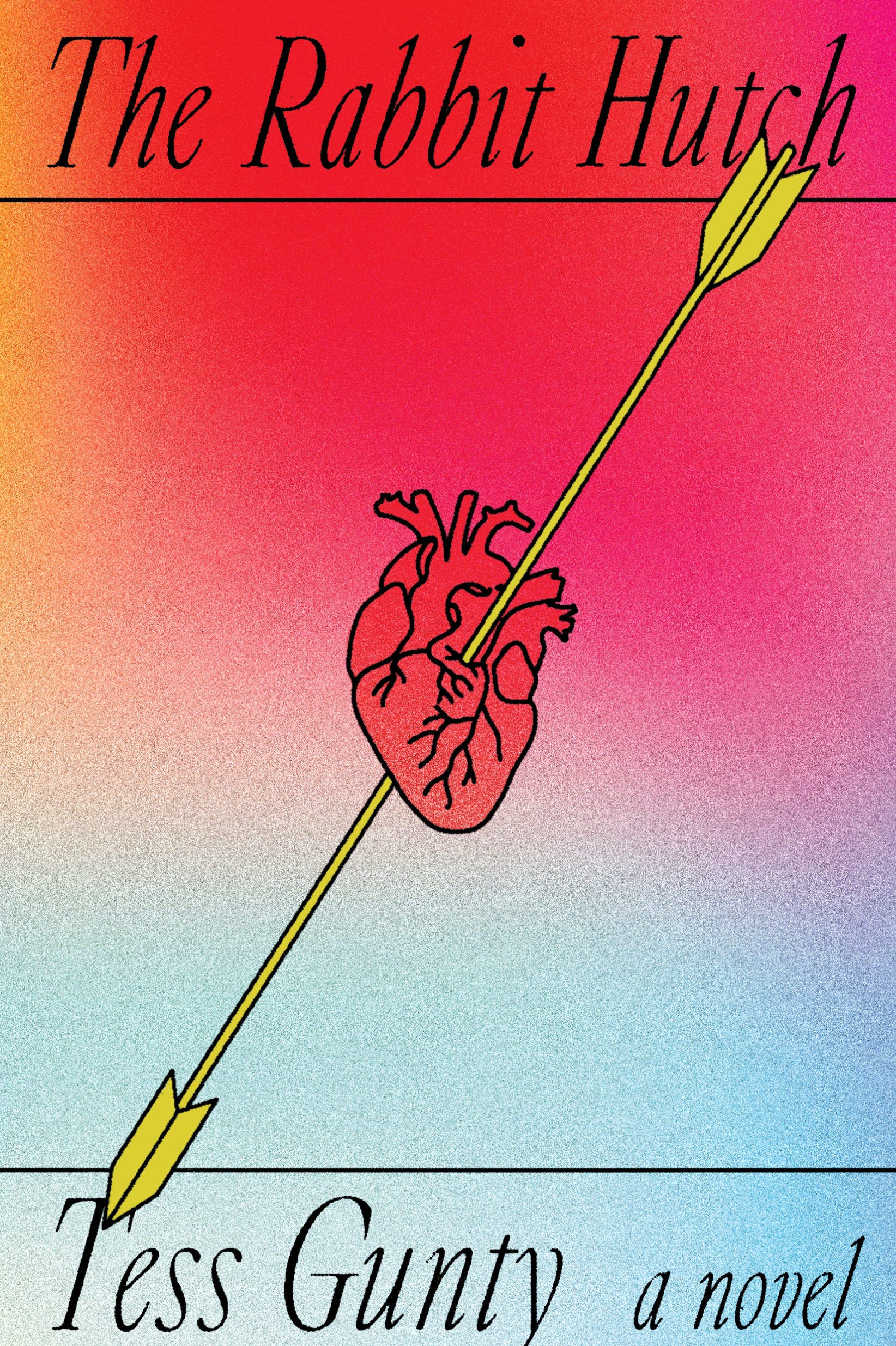
Lost in the Hinterland
Alienation, Tragedy and Communism in Tess Gunty’s The Rabbit Hutch

Note: This is an edited and updated version of an essay that I wrote for an MFA application so it’s a bit more ACADEMIC than my usual voice. I tried to submit it places but no one wants to read essays about books that came out three or four years ago so it’s going on the Substack. I think Gunty is an interesting writer and doing some of the most interesting things at the moment at least for me. The term Hinterland refers to a fantastic book called Hinterland: America’s New Landscape of Class and Conflict by Phil A. Neel that you should go read. He’s probably my favorite Marxist theorist. Very few novels are set in the Rustbelt which was my initial attraction to the novel. I also saw Gunty speak and she had a lot of interesting things to say about the nature of writing. She talked about how the characters in her book were influenced by her experiences growing up in South Bend and she felt she had a responsibility to write about the poor and marginalized. I haven’t heard an author say something like that in a long time.
The popularity of Sally Rooney’s novels such as Normal People speak to the particular cultural moment we are in where the self identified anti-capitalist Left has New York Times best sellers. Despite this, the use of leftist ideology in these novels is often window dressing to attract the audience. Like everything else, critique of capitalism becomes a commodity
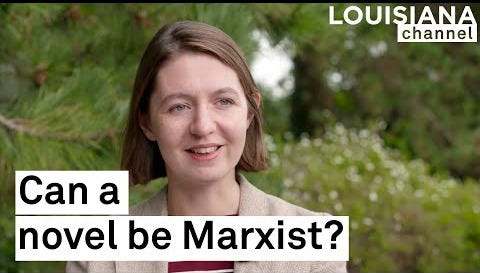
(shoutout to our girl Sally Rooney)
Interestingly though, we’ve seen less “Marxist” novels or novels with Marxist inspiration written from an American perspective, which is where Tess Gunty’s novel shines. Tess Gunty’s novel, The Rabbit Hutch, is filled with communism, literally and figuratively. Her characters’ internal lives are defined by the economic base of a rustbelt city. Yet, in that city, the industrial proletariat no longer exists leaving only the tragic hero Blandine lost in the capitalist wasteland. Terry Eagleton’s writing on Marxist literary criticism, he offers that literature itself should not be partisan but should reflect the social reality. My gripe with so much of the so-called Left’s contemporary literature is that the work evades social reality. Gunty’s work matters in that it depicts class society, goes further by grappling with the alienation we experience on a day to day. Finally it presents a subjectivity about the lack of a revolutionary horizon in an era of popular revolt and distrust of the system.
The setting of The Rabbit Hutch is fictional Vaca Vale, Indiana, a rustbelt city in decline, or as the fictional Newseek articles that describe it, dying (35 and 128). Recounting a familiar tale of Rust Belt America, we learn that the manufacturer, Zorn Automobiles closed, devastating the economy while leaving behind deteriorating cars, abandoned factories, polluted soil, and the decaying mansions once inhabited by factory owners. Vaca Vale is the part of America that has been “left behind” that is so often narrated in popular political narratives with regards to figures such as Trump or JD Vance. The broad lens of the novel is on the city’s poor denizens of the eponymous Rabbit Hutch, an affordable housing complex, who comprise a surplus labor force. With its transformation of employment from the relatively well-paid world of the manufacturing sphere to the minimally paid service sphere, American de-industrialization has consigned Rabbit Hutch inhabitants to poverty. So many novels are set in cities on the coast like New York or Los Angeles, it is refreshing to read something about an area where I’m from that has been largely forgotten by many of those who purport to be advocates of the working classes. My hometown Rockford, Illinois is quite similar to the fictional Vaca Vale. My city has faded after decades of de-industrialization while the yuppies try to bring it back with a rebrand
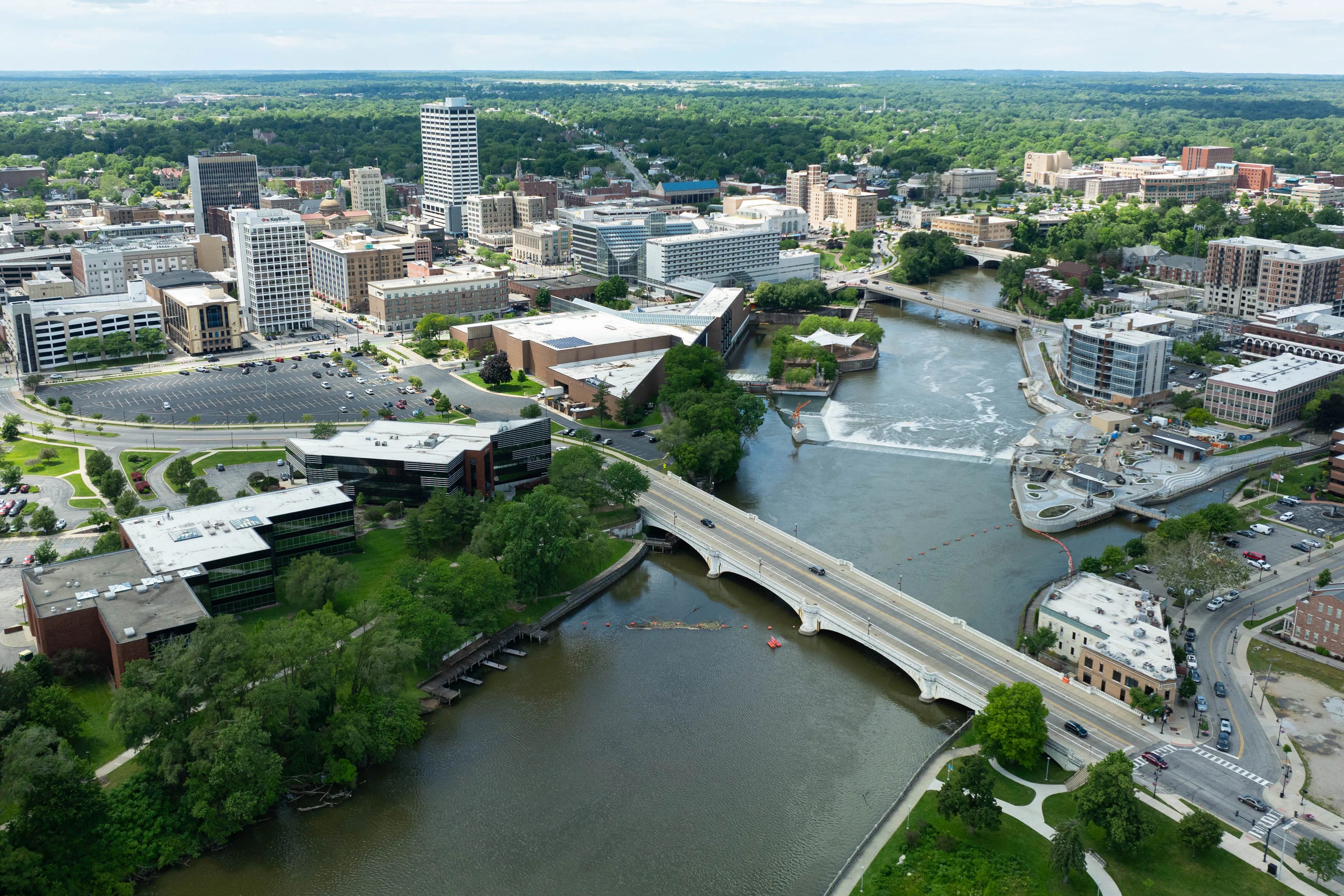
(Vaca Vale or South Bend, Indiana…it reminds me of Rockford so much, it’s crazy. Even the river.)
Through the characters of two Rabbit Hutch inhabitants, Blandine and Jack, Gunty explores how Vaca Vale’s economic conditions affect lives. Their jobs, Blandine's job at Ampersand cafe and Jack’s position as a gig worker who walks dogs, represent typical dead-end, poorly paid jobs in post-industrial America. Their alienated labor causes Blandine and Jack to experience disassociation, loneliness, and unreality. In a conversation with Joan, another Rabbit Hutch resident, Blandine describes alienation “Sometimes I walk around, bumping into people, listening to them joke and fight and sneeze, and I don’t believe anyone is real. Not even myself. Do you know what I mean?” (32). Joan concurs. Similarly, Jack describes how “fake everything felt, how lonely and digital” (87). Blandine announces her biggest fear is infinite loneliness (104).
The theme of alienation is linked explicitly to the economic conditions of Vaca Vale. Alienated from themselves, their work, each other, and the larger world, Jack and Blandine exist as cogs in capitalism. Gunty makes the metaphor explicit when Blandine suggests that “if medical students sliced open her body, they would find a miniature Vaca Vale nestled inside it…a plundered place existing despite its posture of non-existence” (161). The existence/nonexistence paradox for the city invoked by Blandine in reference to herself and lived as not feeling real, is echoed by a visitor to Vaca Vale who says the city reminds him of the “afterlife” (170). These ideas could be ripped almost directly from Marx’s writing on alienation.
To cope with feelings of sorrowful alienation brought on by the economic circumstances, Blandine stays in the city to fight for it. Instead of pursuing higher education and upward mobility, Blandine claims that she and Jack “...can’t leave Vaca Vale,,,we’re the only ones who can save it” (219). Typical of proletarian heroes, Blandine engages in at least one act of political sabotage to protect her favorite park Chastity Valley from business owners who want to gentrify the city(34-38). However, other Rabbit Hutch inhabitants are un-supportive of her efforts to combat gentrification. Indeed, Jack’s vision of how to save Vaca Vale is to endorse the change, saying:
a lot of people say it’s going to help our economy and make jobs and stuff…Pinky doesn’t seem that bad. From what I heard, he grew up poor, he knows what it’s like to not get what you need , and now he wants to help Vaca Vale get out of the gutter. Sure, he’s making money off it. But so what…we need to get out of the gutter, (216).
Jack expresses here the hegemonic view of capitalist gentrification. In the scene, Gunty depicts the working class and oppressed peoples endorsing what will hurt them and resisting efforts to build movements that could help improve their situation. For even as Jack knows he will never be able to rent an apartment in the building his boss Mr. Pinky owns, he argues in favor of gentrification, exhibiting a typical American belief in trickle-down economics
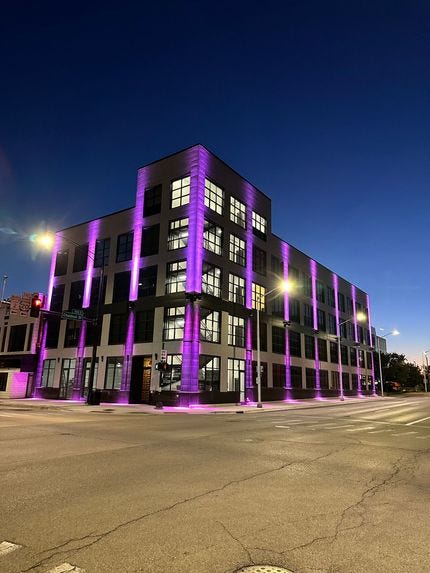
(a new development in my hometown of Rockford, Illinois that could be the home of Gunty’s Mr. Pinky character)
Among the inhabitants of Rabbit Hutch and in her workplace, Blandine’s consciousness of systematic exploitation leaves her politically isolated. She cannot find a political home with others: she is not part of a group creating planned oppositional action. Her act of political sabotage demonstrates that in our current economic landscape, political consciousness is often expressed through participation in “non-movements” with no leadership or formal organization. Her form of activism contrasts with older forms of political action with unions or political parties. The idea of “non-movements” is something I drew from the text Onward Barbarians by Endnotes. The text was written in reaction to the George Floyd revolt in 2020 and other social movements around the globe.
“These non-movements are not in any sense revolutionary in themselves. They are closer to what Camatte has recently called “passive revolts”: subjective expressions of the objective disorder of our times. They reflect above all the growing delegitimization of politics in a context of ongoing stagnation and austerity. It is the combination of steadily rising non-movements involving unprecedented numbers of people, with a decline in democratic legitimacy, that allows us to describe the trend of our era as the production of revolutionaries without a revolution” (Endnotes 2021).
Blandine is a subject produced by the non-movements described in the Endnotes text. Throughout the novel, there are constant allusions to the state of disaster the world is in while Blandine views the current ruling order as illegitimate. Furthermore it is unquestionable that Vaca Vale serves as the perfect example of 21st neo-liberal austerity in American cities. Though not discussed in the text, it is easy to imagine that Blandine was throwing rocks at the police or looting a GameStop in the midst of the riot in 2020.

(Riot cops and SWAT team in my hometown of Rockford, Illinois getting ready to disperse protestors in 2020 outside of Police District One after a multi-racial proletarian crowd broke windows of the police station, graffitied “Black Lives Matter” on the building and attacked police vehicles…easy to imagine Blandine in the crowd)
Blandine’s isolation by her revolutionary consciousness is most fully developed in the chapter “I Leave It Up To You.” Explicitly invoking Marxist theory,in this chapter, Blandine confronts James, her sexually abusive former teacher, using the terms proletariat, bourgeoisie, and alluding to Marxist stages of history. The teacher she had an affair with, James retorts that her use of terms is misguided and derides her Marxism:
...you’re too brilliant to believe that any mortal could bring a classless, moneyless, stateless society into being. (325)
The male characters’ unrepentant response to past abuse denies responsibility and portrays the desire for justice inherent in communist ideology as utopian or juvenile. In another section, James refers to her ideology as “authoritarian” and “despotic” (325). Gunty’s choice to link the predatory male character to criticism of leftist ideology reveals that both capitalist exploitation and sexual predation blame their victims for abuse. Trying to defend herself, Blandine falls into self-deprecation: “I’m not smart enough to lead a revolution, okay…All I know is that we fucking need one” (325). Her response speaks to the tragedy of a revolutionary subject faced with no revolutionary horizon in the current economic conditions. The subjectivity of Blandine that Tess Gunty writes about in her novel is rarely depicted in mainstream literary fiction. Perhaps it is uncomfortable for some to admit that a white woman wrote the most radical mainstream novel of our era and flew under the radar.
In the end, Blandine is stabbed on a live-stream (she survives) by her roommates in a freak accident. Her three roommates (some of whom are young Black men) are convicted with felonies. The first tree is cut down at Chastity Valley clearing the way for gentrification. And the book ends with the question with Blandine asking Joan if she is “awake” and the answer is unclear. None of the internal questions for the characters are resolved while economic base conditions only worsens in Vaca Vale. At the end, Blandine stands alone as the tragic communist hero.